The Hidden Dangers of Delivery

Today, it is easy to pick up a few extra bucks turning your personal vehicle into a delivery service.  Whether it is dropping off food or giving someone a ride, digital companies are constantly developing new ways for average individuals to join the sharing economy.  However, from an insurance standpoint, in doing so you drastically change your personal auto insurance exposure potentially opening yourself up to significant financial loss.

When driving for delivery companies like DoorDash, UberEats, GrubHub, Uber, or Lyft this now becomes what insurance contracts refer to as a “livery” exposure, something typically excluded on auto insurance policies.  While insurance carriers have adapted policies to the sharing economy, not all of them have and often times it requires an endorsement to your policy to fill any gaps in coverage. 

Although you may have some liability protection under the parent entity you are delivering under, most contracts to not provide physical damage for your personal vehicle.  Coverage provided also depends on the company and the contract language you sign at start-up.  For example, DoorDash requires your personal auto policy limits to be exhausted first before they will pay; however, if your personal auto policy does not provide coverage for livery exposures, you are likely in trouble.

This is really important to consider before logging on the app and jumping in the car.  The same can be said for renting your home on AirBnB or Vrbo.  Make sure to talk to your agent about the potential coverage impacts to your policy BEFORE you start delivering.
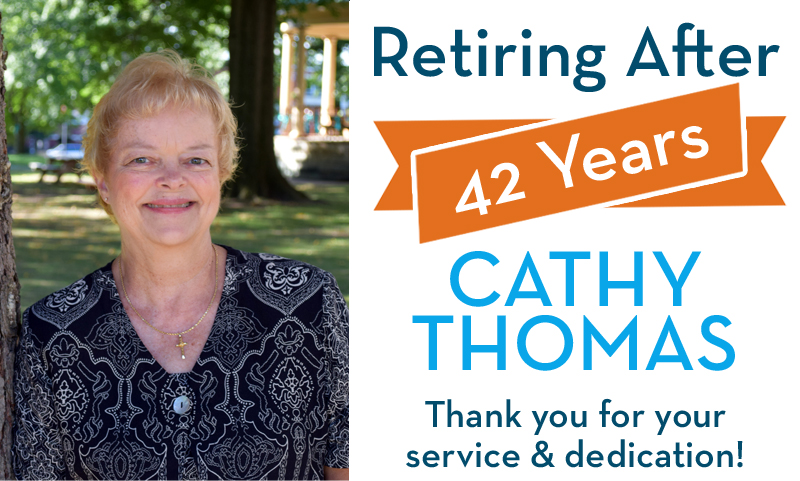
Cathy Thomas

Today is Cathy’s last day with our company. It is, obviously, bitter sweet for our team. Bitter because we are sad to lose her. Sweet because we know she’s ready!

Allow us to take a minute to acknowledge her and her incredible 42 years of service! We wish her the all the best in this next chapter of life and congratulate her on a wonderful career.

Thank you, Cathy!

TELEMATICS

Usage-based auto insurance is a method of insuring drivers for specific individual driving habits.  Historically, auto insurance rates were determined based on a pool of similar drivers in similar locations.  Technology has allowed carriers to be more focused, offering rates specific to each individual insured using telematic devices. 

“Telematics” is the technology that allows the storing and sharing of driving habit data like times of day on the road, miles driven, speed, and frequency of hard breaking.  This data is captured through an app on a smartphone or physical device installed in your vehicle.  Using this data, insurance carriers are able to determine the likelihood of future loss and rate your policy accordingly. 

Virtually all auto insurance carriers are offering telematic options now.  Whether it is Grange’s OnTrack, Westfield’s MissionSafe, Travelers’ Intellidrive, or Progressive’s Snapshot, each device accomplishes the same goal: save drivers money by rewarding safe driving habits.

Contact our office for more information or to get started.

2020 Year in Review

What. Just. Happened.

This is undoubtedly the question we are all asking when thinking back on this year. If you are reading this, hopefully you, your friends, your family, and your places of work have made it through safely.

2020 offered so many challenges for all of us, personally and professionally. From COVID-19, social issues and subsequent rioting, to the election, this year has been chuck full of questions and uncertainty.

The insurance industry faces challenges as well. Hurricanes, wildfires, distracted driving, increasing auto repair costs, rising litigation costs, and law and statute changes are only a handful of the conditions having a major impact on the industry. All of these factors drive us into a “hard market” which means carriers are restricting their offerings and at the same time increasing rates.

The good news is 2020 is over and the dawn of a new year is around the corner. Vaccines are on the horizon. Normalcy is near.

Hopefully we all come out of this stronger, leaner, and more pliable to change than ever before.

Insurance Systems Group Earns Horizon Agency Honor

For the third consecutive year, Insurance Systems Group has earned the honor of being named a Horizon Agency with Westfield Insurance Company.

Westfield Horizon agencies have been identified to have a proven commitment to customers, aligning with Westfield’s promise to provide solutions, as well as demonstrating superior performance industry wide.

This is a distinguished honor and title reserved for only the finest Westfield agency partners.

Masks And Foggy Glasses

Prevent Foggy Glasses While Wearing A Mask post by Encova Insurance.

Wearing a mask has become critical in recent months to help stop the spread of COVID-19, and with any new protective gear, there are best practices for safety. Share these tips with your policyholders to encourage safe mask wearing.

While slips, trips and falls can happen to anyone, wearing masks in public or at work with glasses, sunglasses or protective eyewear can increase the risk of an accident occurring.

Read more

Cyber Risks for Remote Workers

With COVID-19 came a myriad of changes, both professionally and personally.  Time will tell what the “new normal” will look like, but the ability to work remotely has never been more pronounced.  With remote working comes challenges to businesses, specifically Cyber Threats.  The reality is at-home networks do not have the security protections in place that a business typically does. 

Here are a few things you and your staff can do to protect your remote workers:

1. Have a remote worker policy in force

2. Only connect to the internet through secure networks

3. Only click on links, open attachments and download software from trusted sources

4. Use strong passwords

5. Ensure your network, software and applications are up-to-date

6. Don’t respond to requests for information from unknown sources

7. Use multi-factor authentication in lieu of passwords

8. Make sure your IT department, whether in-house or outsourced, is aware of the new remote layout, so they can be prepared for additional phone calls.

The bad actors are delighted to have more daily online activity.  Don’t be the individual or organization to let them in on the party. 


The State of the Insurance Industry during COVID-19

As many states begin to announce plans to reopen the local economy, the residual impact of COVID-19 still remains. The insurance industry has taken steps to provide relief for policyholders that have been impacted as a result of “shelter-in-place” orders.

While the hot button topic as of late is Business Income or Business Interruption and whether coverage would apply, there are a number of positive steps the insurance industry has taken to aid those affected by COVID-19.

Most insurance companies have continued to offer to delay cancellations as a result of non-payment of premium. In addition, many are offering premium credits on personal auto policies for the months of March, April, and even May in some cases. These are essentially refunds of 15% – 25% depending on the carrier – due to a drastic decrease in driving habits.  

Vacancy clauses on many commercial policies have been waived as well given the decreased capacity due to employees working from home.  We have even seen similar premium refunds offered on small business policies with certain carriers.

Health carriers have taken steps to eliminate deductibles for COVID-19 cases and have increased payments to cover Coronavirus testing.

We continue to monitor industry and carrier actions closely as they evolve.

Employee Theft? No way…right?

Every employer – whether a corporation, a small business, or a non-profit – provides a level of trust to employees, a belief they have the company’s best interest at heart.  However, as we know, that is not always the case. Sometimes, the only interest an employee has in mind is their own.

In just the past 2 months, we have had four clients experience Employee Dishonesty claims.  These claims range from $25,000 to $300,000. Each situation is unique in details but similar in execution.  The entity trusted an employee to do what is right with the company’s best interests in mind and, in turn, the employee slowly siphoned money undetected for personal gain. 

While Employee Dishonesty coverage would help to protect and replace theft of funds, there are important policies and procedures to have in place to avoid it in the first place:

1. Ensure no one employee has sole access to financial accounts

2. Make sure your financial books are audited by a CPA annually (or more)

3. Be sure to review the audit with a management team or board of directors

4. Be sure to reconcile bank accounts with deposits or withdrawals

5. Require two signatures on checks

6. Require employees or officers take annual vacations of at least five consecutive days.

It can happen to you.  The question is, will you simply allow it to happen or take steps to avoid it?